Smart Home for Elderly Parents in India: A Practical Safety Guide
Key takeaways
- For an elderly home the goal isn't gadgets — it's safety, independence, and dignity with as little fuss as possible.
- Falls, especially at night, are the biggest risk; automatic path and bathroom lighting is the single highest-impact upgrade.
- Choose hands-free, no-app automation so your parents never have to learn or remember a new device.
- Smart locks and safety sensors give children living away genuine peace of mind without taking away parents' independence.
If your parents live on their own — maybe in your hometown while you're in another city, or abroad — you know the quiet worry. A late-night trip to the bathroom in the dark. A gas knob left on. A fall nobody hears about for hours. You can't be there all the time, and they (rightly) don't want to give up their independence.
This is where a smart home actually earns the name. Not the flashy, app-everything kind — the quiet kind that makes a house safer without your parents having to learn a single new thing. Here's what genuinely helps, and where to start.
First, change how you think about "smart"
For an elderly home, the goal isn't gadgets. It's three things: safety, independence, and dignity. The best upgrades are the ones your parents never have to think about — they just work in the background. If a device needs an app, a password, or remembering a voice command, it's usually the wrong choice for this purpose. Keep that filter in mind for everything below.
The biggest risk is falls — and most happen at night
Ask any doctor: falls are the number-one home danger for seniors, and a large share happen at night, on the way to the bathroom, in the dark. Your parent wakes up, doesn't want to switch on a harsh light, shuffles across the room — and that's when accidents happen.
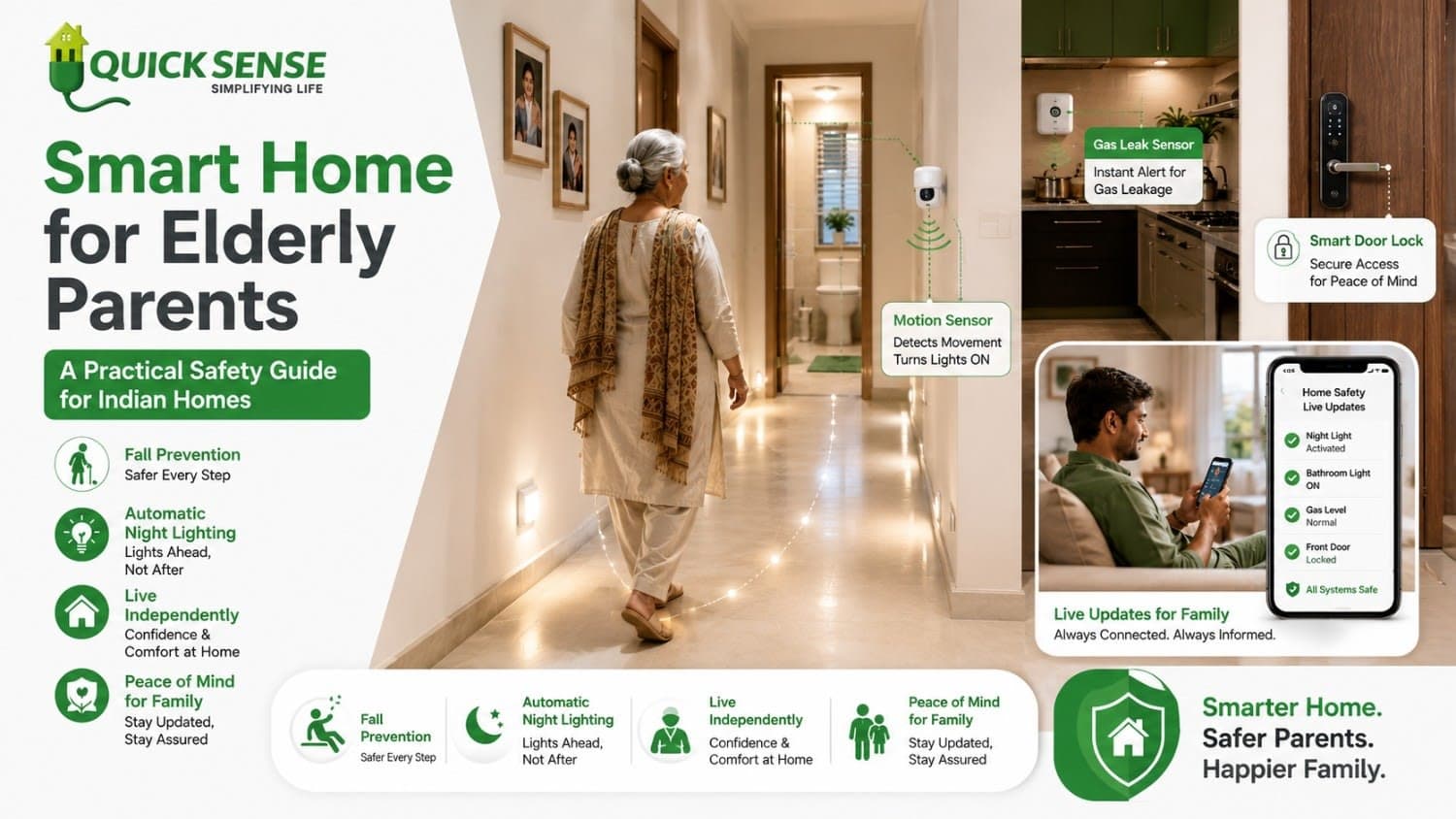
The single highest-impact fix is automatic lighting. A motion sensor turns the light on the instant they get out of bed or step into the corridor, and off again once they're back. No fumbling for a switch, no stumbling in the dark. Automatic staircase and corridor lighting is especially worth it in homes with stairs, and a soft night-light level keeps it gentle on the eyes.
The bathroom: highest-risk room in the house
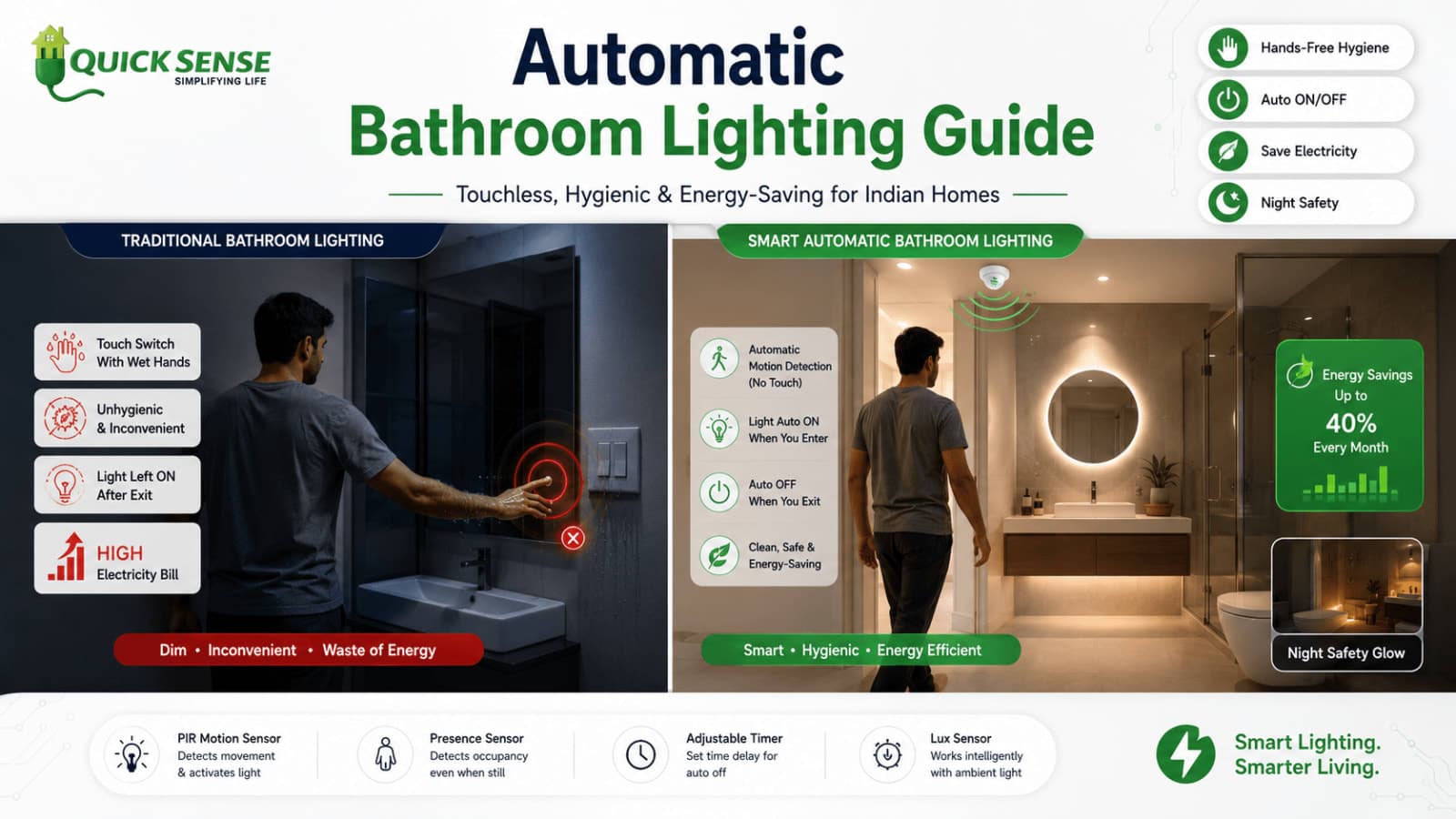
Wet floors, hard surfaces, and night visits make the bathroom the most dangerous room for an older person. Touch-free lighting helps a lot here — the light is simply on the moment they walk in, hands-free, even with wet or unsteady hands. We covered the practical setup in our automatic bathroom lighting guide; for elderly use, set a slightly longer time delay so the light never cuts out while they're inside.
Make everything hands-free
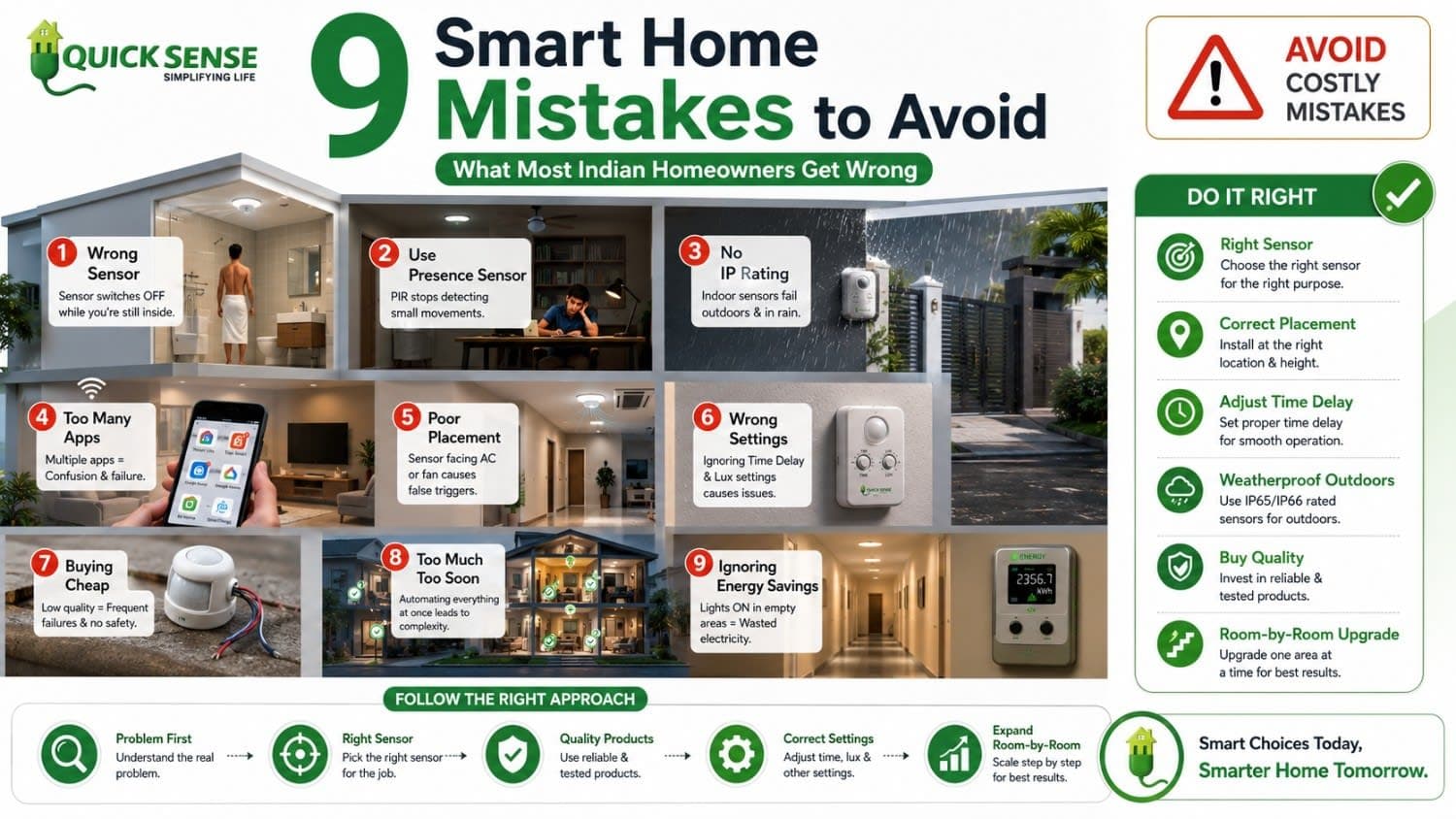
Reaching for switches is harder than we assume — for arthritic hands, for someone using a walker, for anyone moving slowly. Replacing the regular switches in the main rooms with motion sensor switches removes that friction entirely. For rooms where your parent sits still for long stretches — watching TV, reading, praying — use a presence sensor instead, so the light doesn't switch off on them mid-activity (here's why the difference matters).
Early warning: gas and safety sensors
Kitchens are a real worry — a gas knob not fully closed, a flame that goes out. A gas-leak sensor gives early warning before it becomes dangerous, which matters most when your parent's sense of smell isn't what it used to be. These quiet, always-on safeguards are exactly the kind of thing that lets everyone sleep easier.
Smart locks: security without the keys
Keys are a small daily struggle for many seniors — and a worry for you. A smart lock means no fumbling with keys at the door, no panic over a lost key. Just as importantly, you can let a trusted neighbour, relative, or caregiver in remotely if your parent needs help and can't reach the door. It's security that supports their independence rather than replacing it.
Keep it simple — no apps to learn
This is the part people get wrong. They gift their parents a complicated smart system, it overwhelms them, and it ends up switched off in a drawer. The whole point of sensor-based automation is that there's nothing to operate. The light comes on because someone walked in — that's it. Resist the urge to add voice assistants and multi-app setups unless your parent genuinely wants them. Simpler is safer.
Peace of mind for family living away
If you're the son or daughter living in another city, the real value here is emotional. You're not installing gadgets — you're buying the ability to stop worrying quite so much. A home that lights its own path at night, warns of a gas leak, and lets you help with the door from afar means your parents keep their independence and you keep your peace of mind. That's a fair trade.
Where to start (and what it costs)
You don't need to do everything at once, and you don't need to rewire anything — most of these are simple retrofit devices. If I had to pick an order: start with automatic night/path lighting, then the bathroom, then a gas sensor and a smart lock. For realistic budgets, see our home automation cost guide, or the gentle on-ramp in getting started with home automation.
Want help choosing the right setup for your parents' home? Tell us about their place and we'll suggest a simple, safety-first plan.