Touchless & Automatic Bathroom Lighting: A Practical Guide for Indian Homes
Key takeaways
- Automatic bathroom lights are hands-free, hygienic, and cut forgotten-light waste.
- Mount the sensor away from direct shower spray; use a presence sensor for the shower zone.
- Most are easy DIY retrofits at the existing wall switch.
The bathroom is the one room where an automatic light makes instant sense. You often walk in with wet or full hands, you visit it dozens of times a day for a minute or two, and it's the room where lights are most often left on for hours. An automatic bathroom light — one that switches on the moment you enter and off shortly after you leave — solves all three at once: it's touch-free and hygienic, it saves electricity, and it's safer at night. Here's everything you need to choose the right one for an Indian home.
What is an automatic bathroom light?
An automatic bathroom light uses a motion sensor (usually PIR — Passive Infrared, which detects your body heat) to control the light without a switch. Walk in, it turns on. Leave, and after a short delay it turns off on its own. Most home setups are a sensor switch that replaces your existing wall switch, or a sensor built into the light fixture — so no daily switching, ever. New to sensors? Start with our guide to the best motion sensor switches for Indian homes.
Why the bathroom is the #1 spot for sensor lighting
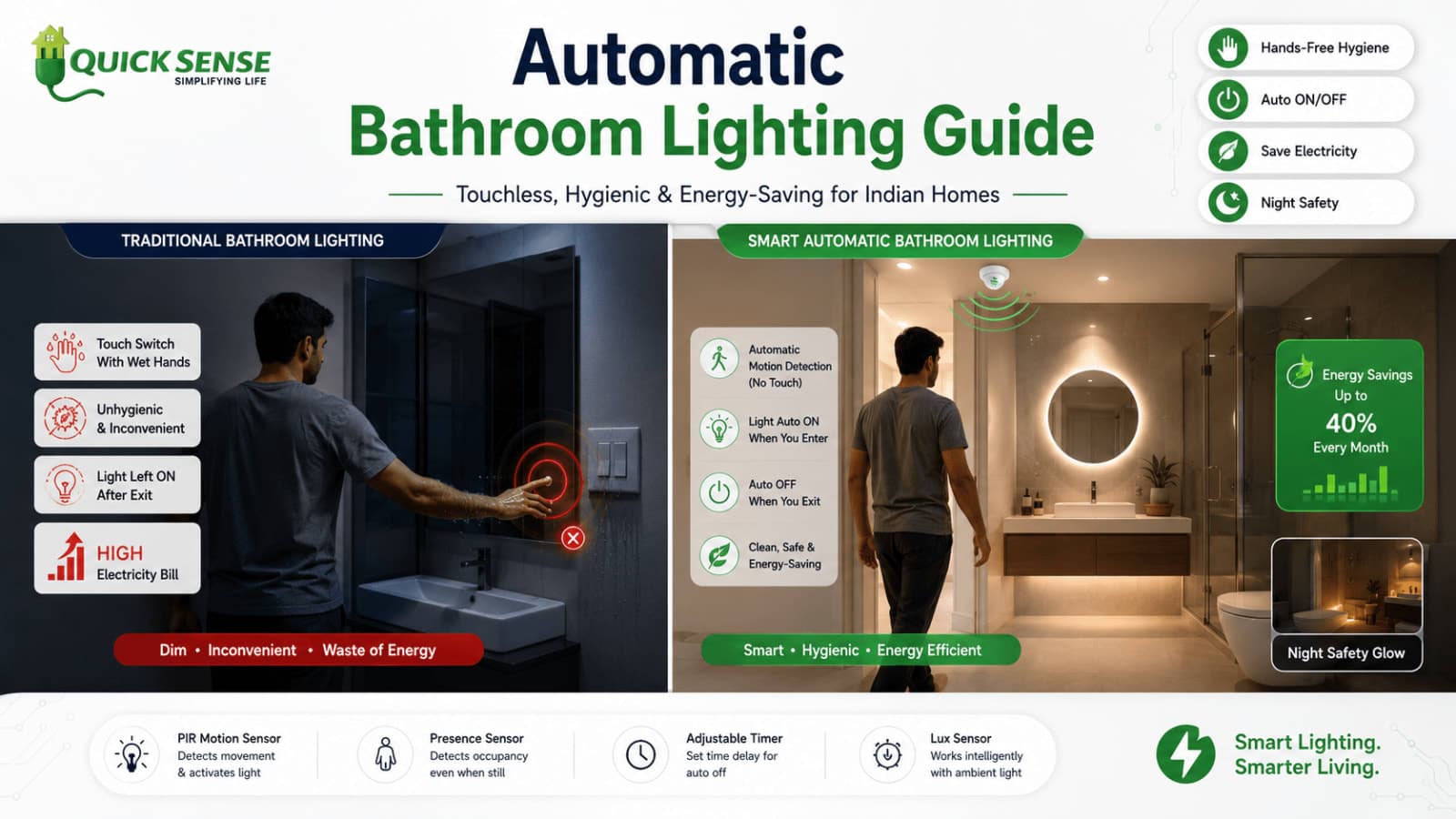
- Hands-free hygiene: no touching a switch with dirty, wet, or soapy hands — and no shared switch spreading germs in a family bathroom.
- Lights are forgotten here the most: quick visits mean the bathroom light is the one most often left burning for hours.
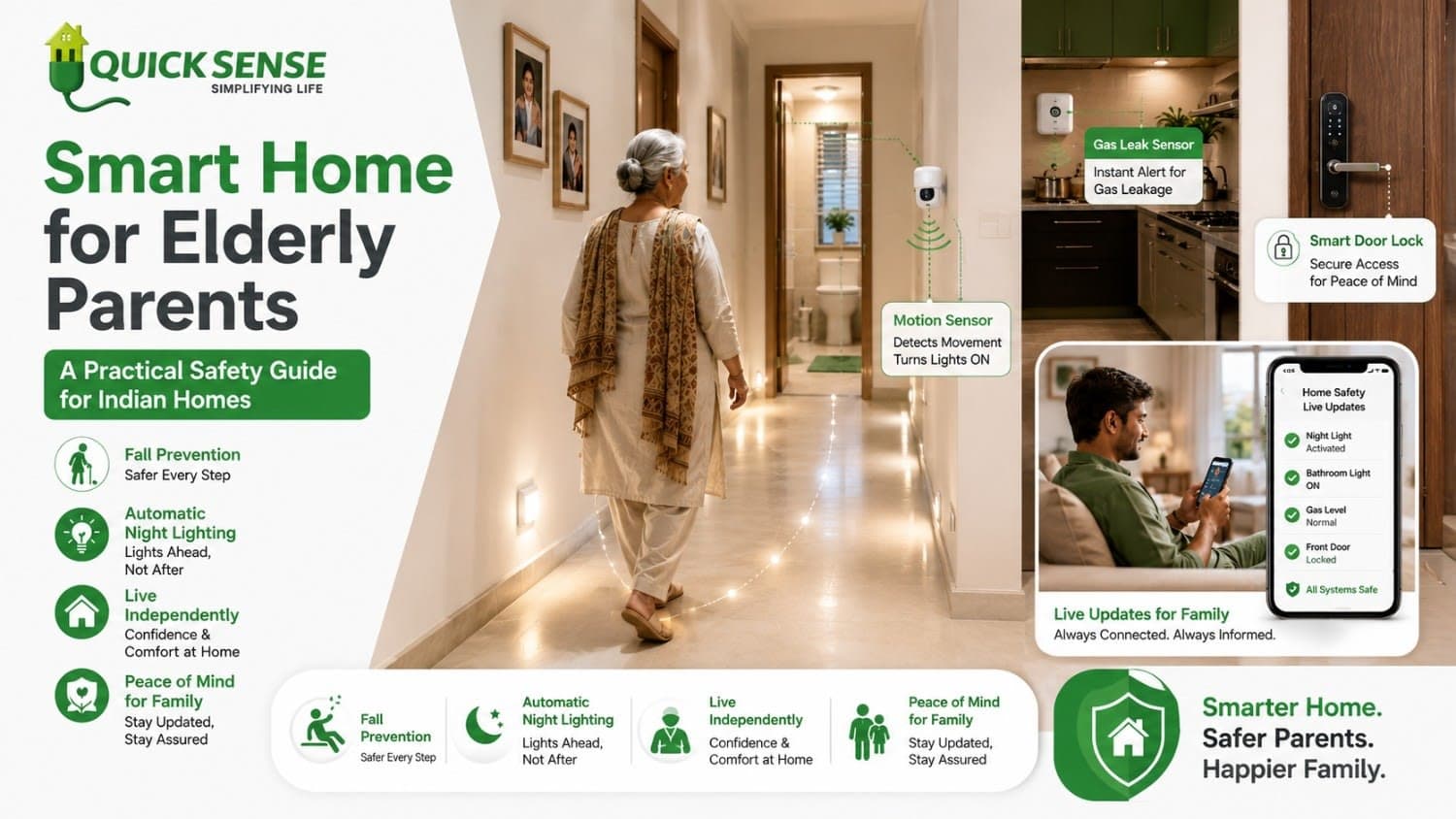
- Night-time safety: a gentle automatic light means no fumbling for the switch in the dark — important for kids and elderly family members.
- Frequent, short use: dozens of one-minute visits a day are exactly where automatic on/off saves the most.
The real benefits (beyond convenience)
Lower electricity bills
A bathroom light left on for hours, multiple times a day, adds up across a year. Automatic control means it's on only for the minutes you're actually inside. See how this compounds across a home in our piece on how motion sensors cut energy bills by up to 60%.
A more hygienic, modern bathroom
Touchless operation is the same logic behind sensor taps and soap dispensers — fewer touch points, cleaner surfaces, a more premium feel.
Safer nights
For midnight visits, the light is simply there the moment you step in — no dark fumbling, no waking up fully. This pairs well with automatic staircase and corridor lighting for a complete night-safe path.
What to look for before you buy (bathroom-specific)
- Moisture & humidity tolerance: bathrooms are damp. Mount the sensor away from direct shower spray, and for wet zones choose a unit rated for humid environments. This is the one factor people skip — and the most important for a bathroom.
- Adjustable time delay: sets how long the light stays on after motion stops. A slightly longer delay prevents the light cutting out while you're standing still.
- Detection angle & range: match it to the room — a ceiling sensor covers a whole bathroom; a wall sensor suits a narrow toilet or passage.
- Lux (daylight) control: keeps the light off during the day if there's already enough natural light from a window — extra savings.
- Easy retrofit: a sensor switch that fits your existing switch box means no rewiring.
Explore options across our motion sensors range to match each bathroom.
Solving the classic problem: "the light turns off while I'm in the shower"
This is the most common complaint with cheap PIR units — you stand still under the shower and the light switches off. Two fixes:
- Increase the time delay so brief stillness doesn't trigger an off.
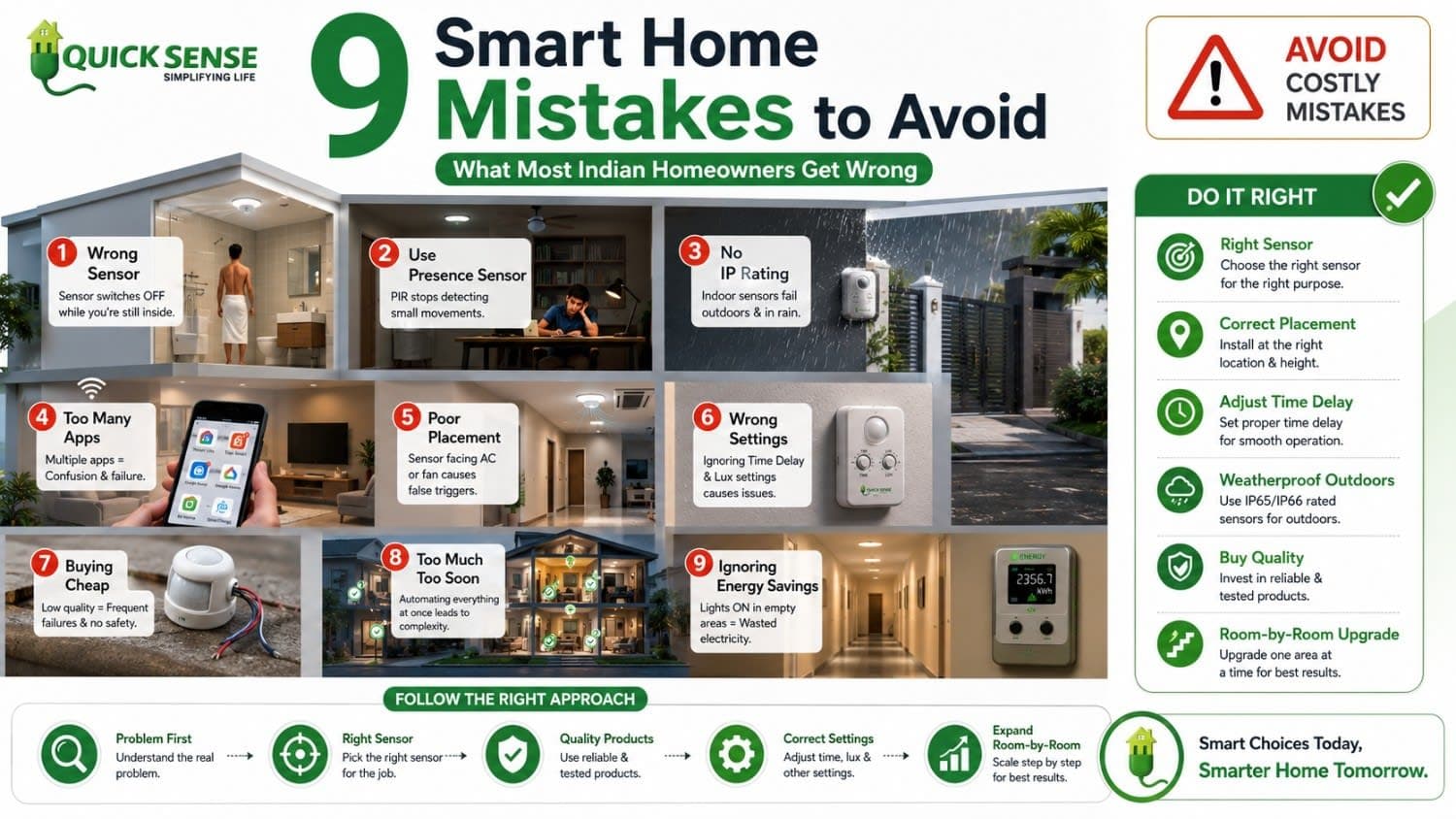
- Use a presence sensor instead of a basic PIR for the shower zone. Presence sensors detect tiny micro-movements, so the light stays on even when you're relatively still. (More on the difference in presence vs motion sensors.)
Where to use automatic lighting in the bathroom
- Main bathroom light: PIR sensor switch with a comfortable time delay.
- Shower / wet area: presence sensor + humidity-safe placement.
- Mirror / vanity light: motion-activated for hands-free grooming.
- Common / guest toilet: the highest-value spot — it's used briefly and left on most often.
- Night light: a low-level automatic light for safe midnight use.
Installation: simpler than you think
Most automatic bathroom lighting is a retrofit — a sensor switch installs in place of your existing wall switch in a few minutes, with no new wiring. For wet zones or whole-home setups, an electrician can position sensors for the best coverage. This is one of the easiest entries into a smart home; see our getting started with home automation guide.
Frequently asked questions
Will an automatic light work safely in a humid bathroom?
Yes — as long as you mount the sensor away from direct shower spray and pick a unit suited to damp environments. Most bathrooms have a dry zone (near the door or ceiling) that's perfect for the sensor.
Does the light stay on long enough?
Quality sensors have an adjustable time delay, so you set how long it stays on after movement stops. For showers, a presence sensor keeps it on even when you're still.
Can I install it myself?
Usually yes — a sensor switch replaces your existing switch and is a quick DIY job. For wet areas or multiple fixtures, an electrician ensures the best placement.
Will it save much electricity for just one small room?
More than you'd expect — the bathroom light is the most frequently forgotten in the house. Automatic control across one or two bathrooms adds up meaningfully over a year.
Upgrade your bathroom the easy way
An automatic bathroom light is one of the cheapest, highest-impact smart upgrades you can make — hands-free, hygienic, and money-saving from day one. Talk to our team to pick the right sensor for your bathroom, or browse the full motion sensor range.