Smart Home Trends in India for 2026 (and What's Actually Worth It)
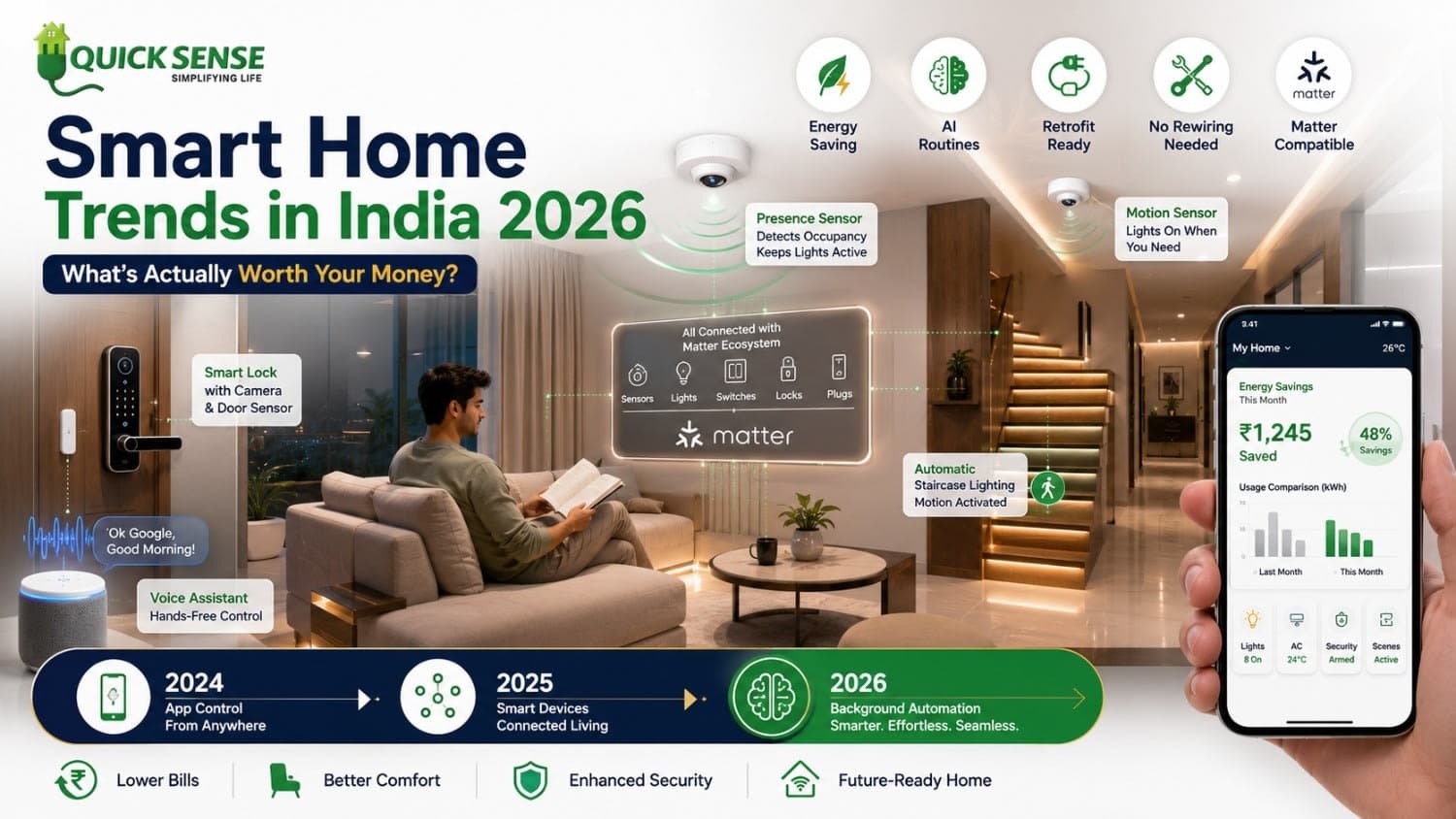
Key takeaways
- The big shift in 2026 is automation that just works in the background — presence sensors and routines instead of tapping an app.
- With electricity bills climbing, energy monitoring and sensor-based lighting are moving from "nice-to-have" to mainstream.
- Matter is slowly fixing the "my devices don't talk to each other" problem, but availability in India is still catching up.
- Retrofit, no-rewiring upgrades make a smart home realistic for renters and existing flats — you don't need a new build.
Every January the internet fills up with "smart home of the future" predictions — flying-car energy, fridges that order milk, the works. Most of it never lands in an actual Indian home. So instead of hype, here's a grounded look at what's genuinely catching on in India in 2026, what's worth your money, and what you can safely ignore for now.
A quick disclaimer up front: a smart home isn't about owning the most gadgets. The homes that feel genuinely "smart" usually run a handful of things really well. Keep that in mind as you read.
1. Automation that works in the background (the real shift)
The biggest change isn't a new gadget — it's a mindset. People are tired of opening an app to switch on a light. The trend in 2026 is automation that just happens: you walk in, the light's already on; you leave, it's off. No tapping, no voice command, no thinking about it.
What's driving this is better sensing. Plain motion sensors have been around for years, but presence sensors now hold lights on even when you're sitting still, which was the one thing that used to make sensor lighting annoying. If you're weighing the options, this still matters most: presence sensors vs motion sensors.
2. Energy monitoring goes mainstream
This one's driven by your electricity bill. With tariffs creeping up and ACs running half the year, more homes want to actually see where the units are going instead of guessing. Energy-monitoring plugs and meters used to be a hobbyist thing; in 2026 they're becoming a normal first purchase.
Pair that visibility with sensor-based lighting and the savings are real — we broke down the numbers in how motion sensors cut energy bills. Honestly, for most families this combo gives a better return than any flashy gadget.
3. Matter is slowly fixing the "nothing talks to each other" problem
If you've ever bought a smart bulb and a smart plug from two brands and found they need two different apps, you know the pain. Matter is the industry's attempt to fix that — one standard so devices cooperate regardless of brand.
It's promising, and it's improving. But let's be honest about India: device availability and full support still lag the US and Europe. So in 2026, Matter is worth knowing about and checking for — just don't buy something only because the box says "Matter" until you've confirmed it works with what you already own.
4. AI routines that learn instead of being programmed
"AI" gets slapped on everything, so take this with a pinch of salt. But there's a genuine shift toward systems that learn your patterns — when you usually leave, which rooms you use in the evening — and adjust automatically, rather than you setting rigid timers. It's early days in India, and the basics (good sensors, sensible automation) still matter more than any AI label. Get the foundation right first; the smarts ride on top.
5. Retrofit-first: you don't need a new build
For years "smart home" implied an under-construction villa with wiring planned from scratch. That's no longer true, and it's a big reason adoption is climbing in regular flats and builder floors. Most upgrades now fit your existing switchboard — a motion sensor switch replaces a normal one in minutes, no rewiring.
This matters especially for renters. You can take a meaningful step without touching the building's wiring. New to it? Start here: getting started with home automation.
6. Security that's integrated, not bolted on
Cameras, smart locks, sensor-triggered lighting, and door alarms are increasingly bought as one connected setup rather than separate bits. The logic is simple: a light that snaps on when motion is detected at 2 a.m. is both a convenience and a deterrent. Expect more homes in 2026 to treat lighting and security as the same system.
7. Lighting that's about comfort, not just on/off
Beyond saving energy, people are paying attention to how light feels — warmer tones at night, automatic path lighting so nobody fumbles for a switch in the dark. Automatic staircase and corridor lighting is a small upgrade that quietly improves safety, especially for kids and elderly family members. It's the kind of thing you don't notice until you've lived with it.
8. Voice assistants finally speaking your language (better)
Hindi and regional-language support on voice assistants keeps improving, which makes voice control actually usable for more of the household — not just the one person comfortable in English. It's not perfect, but it's far better than a couple of years ago.
So what's actually worth it in 2026?
If you take one thing from all this: don't chase the gadget, chase the outcome. The upgrades that consistently pay off are unglamorous — sensor-based lighting, energy monitoring, and a couple of well-placed presence sensors. They lower bills, add daily convenience, and need no rewiring. The fancier stuff (full AI ecosystems, every-device Matter setups) is worth watching, not rushing.
Not sure where to begin for your home or budget? Our home automation cost guide lays out realistic budgets, or just tell us your space and we'll suggest a sensible starting point.