How to Reduce Your Electricity Bill in Summer (India): 12 Practical Ways for 2026
Key takeaways
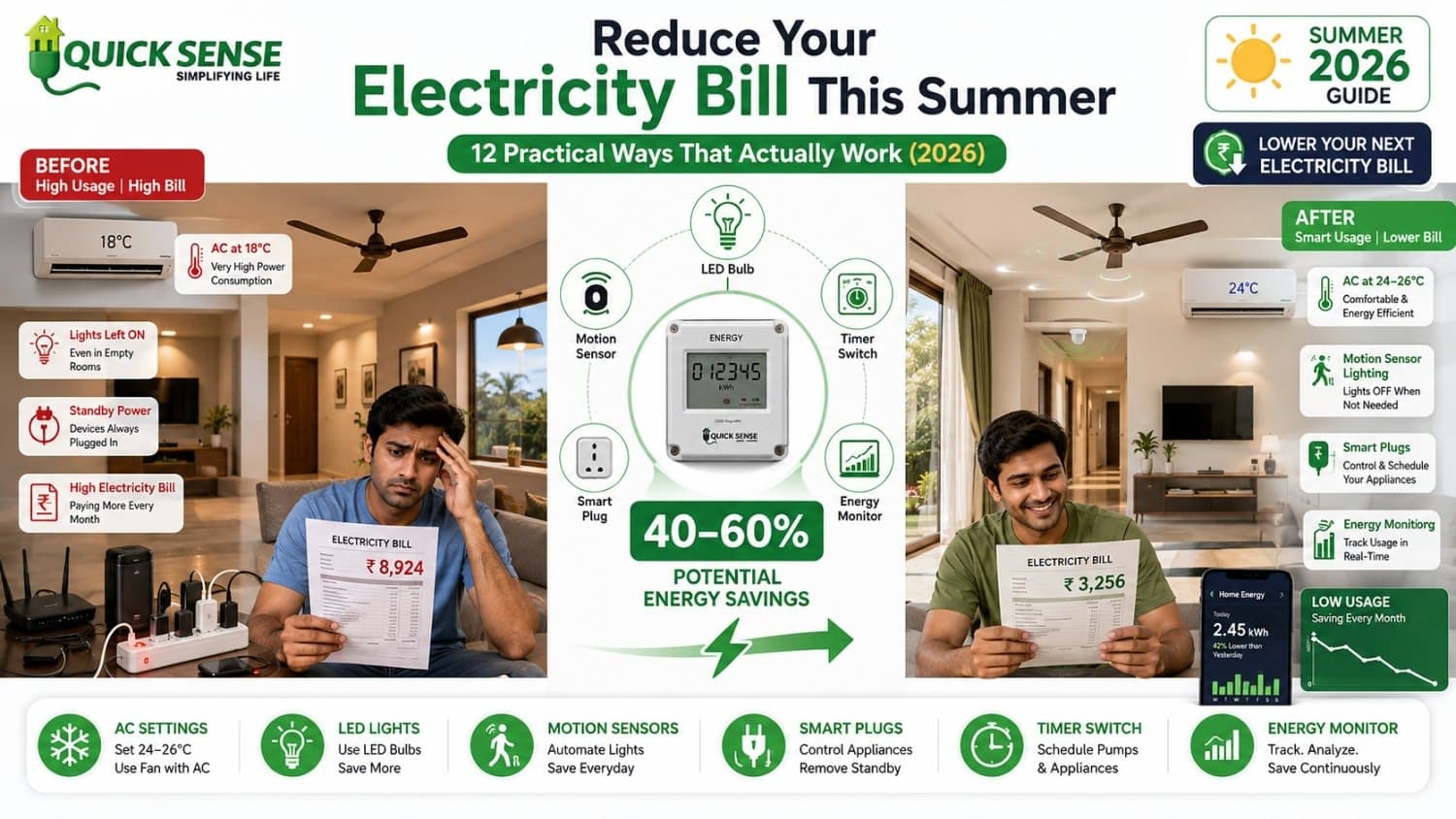
- Your AC is the biggest driver of a summer bill — setting it to 24–26°C and running a ceiling fan alongside is the single highest-impact change.
- Lighting waste adds up fast: switch to LED and use sensor/automatic lights so nothing burns in empty rooms.
- Standby (phantom) loads and lazy appliance habits quietly inflate the bill — smart plugs and full washing-machine loads help.
- You can't cut what you can't see — energy monitoring shows exactly where your units go, so you fix the biggest wasters first.
Every Indian summer, the electricity bill arrives and something inside you deflates a little. The AC's been running, the fans never stop, and somehow the number is higher than last month — again. The good news: most of that bill is under your control, and you don't need solar panels or a renovation to bring it down. A mix of small habit changes and a few smart upgrades can knock a real chunk off. Here are 12 practical ways, roughly in order of impact.
1. Fix your AC settings — this is the big one
Your air conditioner is, by a wide margin, the biggest reason your summer bill jumps. And the single most effective change costs nothing: set it to 24–26°C instead of 18°C. Every degree you drop adds roughly 6% to the AC's consumption, and honestly, 24°C with a fan running feels just as comfortable as a freezing 18°C room. Which brings us to the next point.
2. Run a ceiling fan with the AC
A fan uses a tiny fraction of what an AC does, and it circulates the cool air so you feel comfortable at a higher thermostat setting. AC plus fan at 26°C beats AC alone at 22°C — both for comfort and for the bill.
3. Switch every bulb to LED
If you still have any old incandescent or CFL bulbs, replace them. LEDs use a fraction of the power for the same brightness and last for years. It's the most boring tip on this list and one of the most reliably effective.
4. Stop lighting empty rooms (automate it)
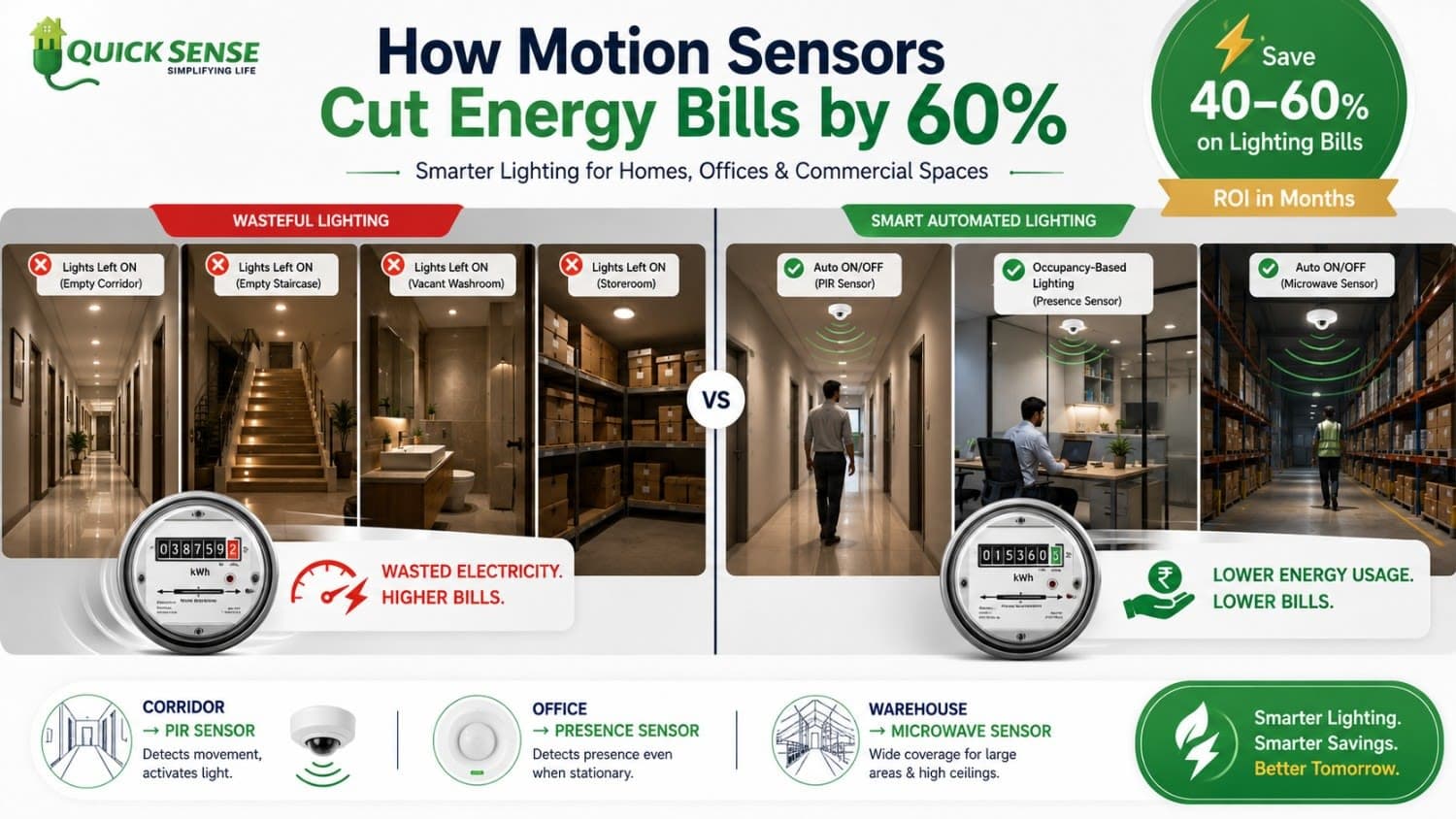
Here's a waste almost every home has: lights burning in rooms nobody's in — the bathroom, the stairs, the store room, the balcony. You can nag the family about switches, or you can let sensors handle it. A motion sensor switch turns the light on when someone enters and off when they leave, automatically. For rooms where people sit still, use a presence sensor so it doesn't switch off on you. We broke down the savings in how motion sensors cut energy bills — it's one of the easiest wins there is.
5. Kill standby (phantom) power
TVs, set-top boxes, chargers, microwaves — many devices sip power around the clock even when "off." Individually it's small; across a home, all year, it adds up. Unplug what you can, and put the worst offenders on a smart plug so they're truly off (or scheduled) without you thinking about it.
6. Use big appliances smartly
- Washing machine: run full loads (a half load uses almost the same energy), prefer cold-water washes, and use a lower spin speed.
- Refrigerator: it runs 24×7, so keep the coils dust-free, don't overfill it, and make sure the door seal is tight.
- Geyser/water heater: a timer switch so it heats only when needed — not all day — makes a real difference.
7. Block the heat before it gets in
Cooling a room is much cheaper when less heat enters it. Close curtains or blinds on sun-facing windows during the day, and open up for cross-ventilation in the cooler morning and night hours. Your AC will cycle less and last longer.
8. Service your AC and clean the filters
A clogged filter or an unserviced unit works harder for less cooling — burning extra units the whole season. A quick pre-summer service and a monthly filter clean pays for itself. The same logic applies to dusty fan blades and old appliances.
9. Set the fridge and AC to sensible, not extreme
Extreme settings rarely help. A fridge doesn't need to be at its coldest, and an AC at 18°C isn't cooling your room faster — it just runs longer. Moderate settings cool just fine and cost less.
10. See where your power actually goes
You can't cut what you can't measure. Most people have no idea which appliances are eating their bill. An energy-monitoring setup shows real consumption, so instead of guessing you target the two or three biggest wasters. It's the difference between random tips and a plan — and it's a natural next step once you've done the basics (see our getting started with home automation guide).
11. Automate the "someone left it on" problem
So much waste is simply things left running — the outdoor light till noon, the corridor light all night, the geyser all morning. Automation quietly removes the human error: sensors for lighting, timer switches for the geyser and water motor, day/night control for outdoor lights. You set it once; it saves every day after.
12. Think longer-term
Once the quick wins are done, bigger moves like a 5-star inverter AC, better insulation, or rooftop solar deliver the next tier of savings. They cost more upfront, but for a high-usage home they pay back over time. Start with the free and cheap changes above, then reinvest what you save.
Your quick-win checklist (do these first)
- AC to 24–26°C, fan on.
- All lights LED; sensors in high-waste rooms.
- Smart plugs on standby-heavy devices.
- Full washing loads; geyser on a timer.
- Curtains closed on sunny windows.
- AC serviced, filters clean.
None of these need a big budget, and the habit changes show up on your very next bill. For a sense of what the automation upgrades cost, see our home automation cost guide — or tell us about your home and we'll suggest the highest-impact, lowest-cost setup for cutting your bill. Browse energy-saving options in our product range.